Monthly Archives: September 2008

A productive weekend in the fight against clutter

For once, I actually stuck to my vow for a productive weekend.

Yesterday, I bought a cheap coupon organizer from the bargain bin at Target for $1. I categorized all of my coupons in a system that works for me.

I’ve struggled with coupon organization in the past, so I’m hoping that getting organized will make the process easier for me. For the first time, I was excited to go through the Sunday paper this week instead of dreading it. Unfortunately, the coupons in this Sunday’s paper kind of stunk. :(

Last night, Tony and I emptied the plastic drawers in which we had crammed all kinds of miscellaneous junk and important documents. We threw away a lot of junk. Our birth certificates were jumbled in the same mess as credit card statements that we don’t even have a reason to keep.

Using a larger organizer (also purchased from the Target bargain bin for $1), I filed our most important documents, including our birth certificates, insurance information, credit and student loan documents, and tax information. The rest of the stuff in the drawers was categorized and organized.

This jumble of miscellaneous junk:
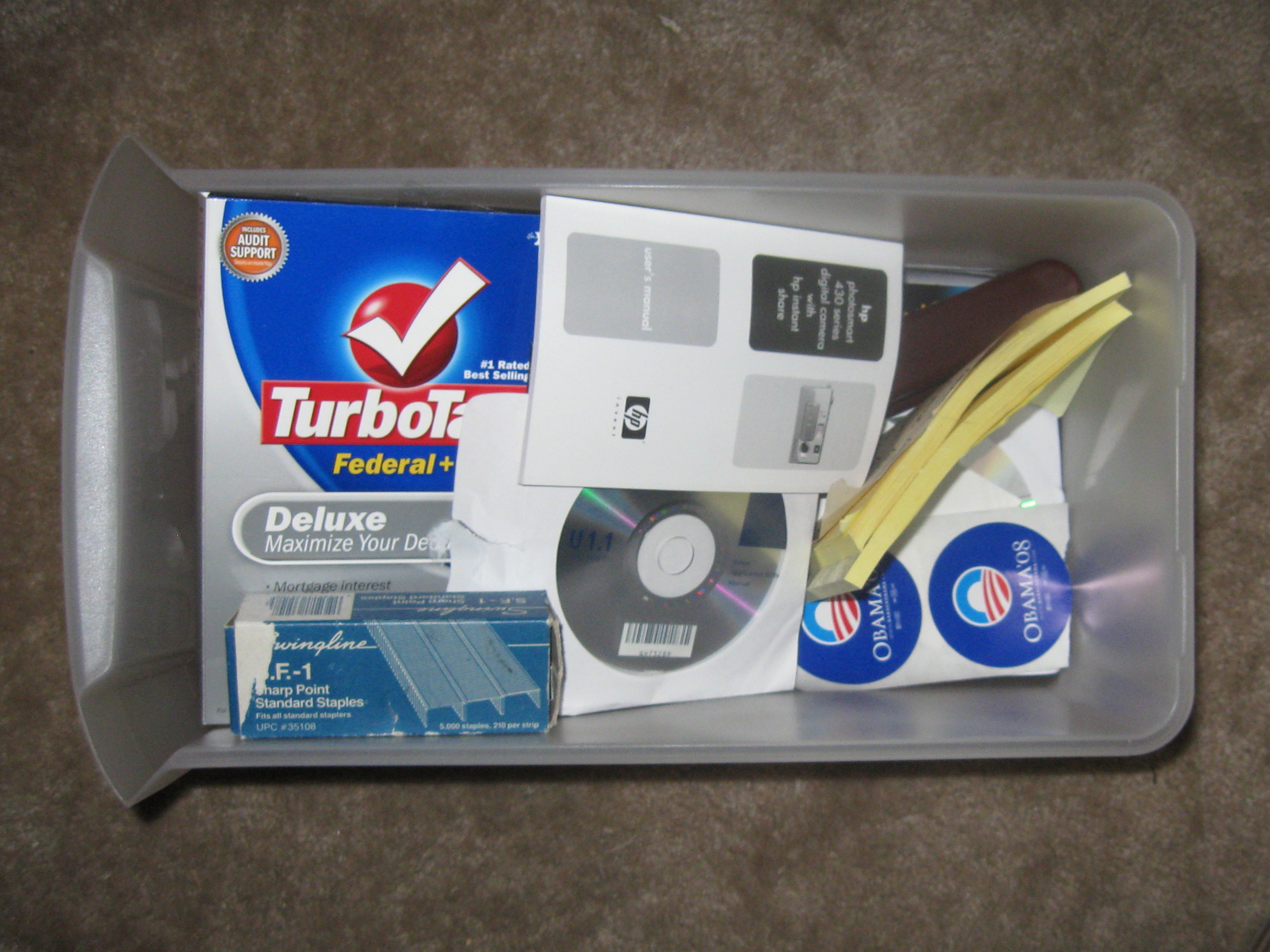
Became this organized drawer of office supplies:

And this organizer filled with important documents:

The photos above only represent one drawer. We went through six “organization bins” that have mainly become vessels for a jumble of quilting materials, office supplies, miscellaneous junk, and important documents.

Our important documents are now filed in the organizer and kept in a safe location. Our six drawers are now separated and organized: two drawers for office supplies, two for quilting materials, one for electronics, and one for owner’s manuals and warranties for our electronics. I’m feeling pretty good about the fact that everything is finally organized in a functional way. Now I can get to the batteries when I need them! We’ll see how long it lasts.

I wasn’t thrilled with our closet organization efforts. The result was a small donation bag for Goodwill and a little less clutter. We still have a few weeks before we can switch out our summer clothes for our winter wardrobes. Overall, the difference is negligible. I’m telling myself it’s because our seasonal closet purge has been effective in keeping clutter to a minimum.

Our biggest project for the weekend was purging our CD collections. For two years, our obsolete CD collection has been cramping our style. Though we mainly listen to music electronically on our iPods and computers and only use CDs in the car, we’ve been hesitant to clear the CDs and jewel cases out of our apartment. Over 100 empty jewel cases have been taking up valuable closet real estate for the past two years, and stacks of loose CDs were in our way in every room. Today, I was finally motivated to get rid of them once and for all.

We collected all of the loose CDs from around the apartment. Then we matched the CDs to their jewel cases. We sorted them into three piles: already burned, not yet burned, and don’t want to burn. Many of them I didn’t even want. I spent the afternoon burning the music that I wanted to keep on to my hard drive and reorganizing my iTunes library.

Then I searched for each of the CDs on Amazon to see what used copies are worth. Most of them were only selling for a penny. I found some good selling prices for about 25 of them, including a Bob Dylan box set that’s currently priced at $40. We’ll be listing the ones that are worth $2 or more on Amazon for a little lower than the current lowest selling price to see if we can make a little money.

We decided that the CDs worth under $2 aren’t worth the hassle of selling on Amazon. We’ll keep the ones we might listen to in the car, and we’ll try to sell the rest at a local used music shop. If no one’s interested in buying, then we’ll just donate them to Goodwill or the library.

Two years ago I wasn’t ready to part with my CD collection. Now, after letting them collect dust and take up space for so long, I’m finally ready to let them go. Sometimes all it takes to comfortably let go of clutter is a little time.

It feels really good to cross this stuff off my fall clutter clearing list!

What about you? Do you still have CDs that you don’t use or other clutter lying around the house? Why not get rid of it?
Luxury on Less Tip: Fresh scents without paying more

I love to burn candles, especially when I’m hosting visitors or relaxing at home in the evenings. I’m especially partial to Yankee Candle. Unfortunately, anybody who’s ever shopped there, or for any candles for that matter, knows they’re incredibly overpriced.

The nice thing about Yankee Candles is they do burn for a long time compared to other candles. The problem with investing $20-$30 in a candle is that you’re stuck with that scent for as long as it takes to burn the candle.

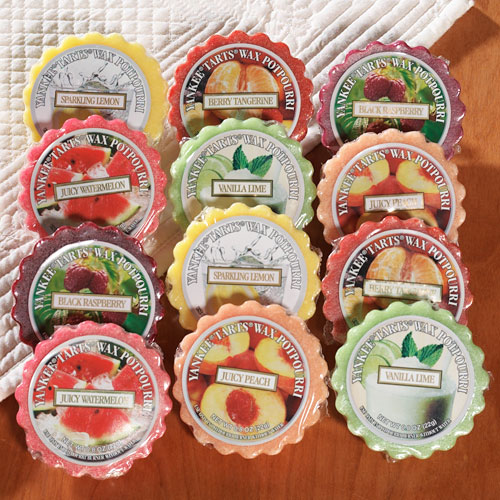
I like to try different scents and change them up with the seasons, but I certainly don’t want to spend the money on several full-sized candles. My solution is burning votives and tarts instead of full-sized candles. Votives and tarts are regularly priced at $1.99 each, but I never pay full price. I stock up during seasonal clearance sales or by using coupons. If you register online, you’ll frequently receive coupons and other offers from them by email. I think the first one they send is $10 off a purchase of $25.

You would think that a larger candle would be more economical than several tarts or votives, but they actually cost the same amount per hour of fragrance. The largest jar candles cost $25 for 150 hours of fragrance. That’s about 17 cents an hour. Tarts provide about 12 hours of fragrance, and regularly cost $1.99 each, which also comes to 17 cents an hour. At the same price per hour, you can get a wide variety of scents.

Votive candles don’t require any additional investment to use them; as long as you have a votive candle holder, you can burn them.

I prefer tarts because the scent is stronger, and they burn cleaner than candles. They require an initial investment of the tart burner, though. If you buy them in the store, you’ll pay $12-$20 for a tart burner. I’ve bought generic knock-off burners at Bed, Bath, and Beyond for as little as $2.99. Unless you buy an electric burner, they also require tea lights to melt the tarts. I usually pay $2.99 for 100 tea lights, and because I only burn candles on certain evenings and special occasions, they last me months.

For me, buying tarts and votives is like buying samples. When I find a scent that I particularly love, I might consider investing in a full-sized candle. Maybe. But most of the time, I’m content to burn a wide variety of tarts.

Right now through Sept. 21 at YankeeCandle.com you can buy tarts and votives for $1 each – 50% off the original price. Just use the coupon code XF809B2. Unfortunately, this deal is only worthwhile if you’re really planning on stocking up, because they charge a flat rate of $6 to ship orders under $100.

I received a printable coupon for $1 tarts by email for in-store use, but I can’t find it on the site. If you receive emails from Yankee Candle, check your inbox to see if they sent you a printable!

Subscribe

Our method for meal planning

It can take a while to get the knack of meal planning. We’ve been doing it for two years now, and our method has evolved into something that works pretty well and helps us save money, so I thought I’d share with all of you.

Every Saturday or Sunday morning depending on our schedule, my husband and I sit down with the store circulars for the two grocery stores near us. If we haven’t picked up the circulars, we can find the sale information at MyGroceryDeals.com. It’s completely free and easy. You just enter your favorite stores, and it gives you their sale information.

First, we go through all of the current sale prices to see if anything jumps out at us. There’s usually at least one meat sale every week for beef, chicken, or pork. Knowing which meat is on sale gives us an idea of what kind of meals we’ll be making. If there’s nothing on sale, like this week, then we stick with chicken, because we usually buy it in bulk and always have it on hand.

We also look at the sale prices for produce and dairy. A great deal on certain vegetables or cheese might encourage us to make one of our favorite vegetarian dishes.

If we’re crunched for time or we’re not feeling creative, then we stick to a basic repertoire of quick and easy meals that we make frequently. These include things like tacos, chicken quesadillas, BLTs, & chicken and broccoli. Our repertoire is constantly evolving and growing as we try new things.

If we’re feeling creative or we’re in the mood to expand our repertoire, we search for new recipes that include the sale items we’ve decided to buy. Our favorite website for this is FoodNetwork.com. It has an easy search interface that allows you to enter the ingredient for a list of meals that include it. Other good sites that we’ve used include AllRecipes.com, Elise.com, and Taste of Home. There are many recipe sites on the web based on the same principle, so sometimes all it takes is a simple Google search.

Once we’ve decided on our meals, we plan which nights we’ll eat them based on ingredients we’re using or reusing and other factors. For instance, if we’re having fish, we always cook it the same day that we buy it. If we’re roasting a whole chicken and using the leftovers for chicken quesadillas later in the week, then obviously the roasted chicken comes first. If we know we’ll be pressed for time on a certain night, then we’re sure to plan for a quick and easy meal. Ingredients with a long shelf life are saved until the end of the week, and weekends are reserved for more complicated recipes.

We organize our grocery list based on the layout of the store. All of the items are split up into categories: Produce, Dry Goods, Dairy, and Meat. We go through each recipe and write down its ingredients based on the categories.

Categorizing all of our items streamlines the shopping process, and makes it easier to remember everything on our list. We don’t run the risk of back tracking to the produce section for an item that was written in at the bottom of the list. If we’re shopping the sales at more than one store, then we note on the list where the item will be purchased.

Finally, once our list is complete, I go through my coupon stash to make sure I don’t have any useful coupons. I usually don’t since we don’t buy many processed foods, but it never hurts to check.

This is the method that we’ve found most effective for both time and money management. What methods work best for you?

Subscribe

Menu Plan Monday & grocery round up – 9/13-9/19

Since we stocked up on 5 pounds of chicken breasts last week and I wasn’t thrilled with this week’s meat prices, we decided to stay away from the meat department today.

The result is our best grocery bill yet: $50.42! That doesn’t include $15 at Costco for our monthly purchase of coffee and mozzarella cheese for homemade pizza, but I’ve decided to leave that out so I can savor this week of budget perfection. Yes, I know it’s cheating. No, I don’t care. :)

And now for this week’s meal plan:

Saturday: Porterhouse steak, white potatoes, and green beans (We bought the steak on sale weeks ago, and one steak feeds both of us.)
Sunday: Late summer minestrone soup with garlic toast
Monday: Arroz con pollo adaptation (made with chicken breast instead of a whole chicken)
Tuesday: Leftovers
Wednesday: Italian grilled cheese & tomato sandwiches
Thursday: Grilled chicken breast sandwiches with oven fries
Friday: Homemade pizza

It’s so satisfying when I’m able to stay within budget!

Be sure to visit OrgJunkie for more great meal plans.

Why every couple needs a prenuptial agreement

This morning, I read this New York Times article on the importance of financial common ground in marriage. These are basic tips that we all know, but it got me thinking about the underlying theme of basic communication.The article discusses the importance of communication during marriage, but the groundwork for good financial communication begins before the wedding.

I am often surprised at how little my friends share financial information with their significant others. I’m not suggesting that you swap credit scores on the first date, but full financial disclosure is an essential part of engagement. It was easy for Tony and me to blend our finances because we started with so little; it’s more complicated for couples who have already acquired independent assets.

Drawing up a prenuptial agreement before marriage can help facilitate these discussions. A common misconception is that prenups are only for couples with huge amounts of wealth, or that their purpose is to protect one spouse’s assets from the other in the event of a divorce. In reality, a prenup outlines what will happen to all assets if you divorce, even normal assets like the equity in a home that you bought before you met your spouse.

The prenup has gotten a really bad rap, but it shouldn’t be viewed as a way to keep your spouse from getting your money if you divorce. If you come into the marriage with individual assets, a legal document that says what belonged to whom before the marriage and how shared assets will be distributed makes things clearer.

All couples need a “prenup.” It doesn’t necessarily have to be a formal legal document that distributes wealth. For young couples who have no assets, it can simply be a verbal agreement about how you plan to manage your finances.

A prenup allows you to lay it all out there before you’re married, take stock of your individual and shared assets and debts, and have some very important discussions about money that many financially independent adults are uncomfortable having with their partners. Through these money discussions, you’ll discover common ground from which you can build your financial goals and philosophies.

Tony and I agree that money will be an open topic in our family, not just with each other but also with our children. There will be no secrecy about our budget or how we manage our money. I want them to understand that money management takes hard work, and even a grown-up salary isn’t a limitless fortune.

We also share a mutual desire for security above possessions. We don’t want to spend our income, no matter how much we have, on a lot of “stuff.” Our frugality began out of necessity, but we plan to continue living frugally even as our income increases. We will always drive inexpensive cars, cut corners where we can, and live below our means. As our income increases, the only difference in our lifestyle will be that we’ll have more money to distribute in our savings accounts for emergencies, retirement, and education for our children.

We agreed that I’ll continue to work full-time until he finishes graduate school, and then he’ll take over the responsibility of earning our income so I can stay home with our children for a few years.

Finally, we agreed that once we got married, our assets and debts became shared. This may not work for everyone; for instance, your prenup may dictate that you’re not responsible for your fiance’s credit card debt. Tony and I decided it would be easier for us to blend everything and work as a team to pay down debt and continue saving together. The important thing to is figure out what you’re comfortable with before you tie the knot.

We moved in together shortly after we got engaged, and we opened a joint bank account. The lines between his and hers were immediately blurred. Communication eased the transition tremendously, and we’ve had no problems with this system.

Drawing up a verbal “prenup” made it much easier for us to budget, manage our money, and plan our future. We frequently remind each other of our goals during moments of financial weakness (i.e. the clearance cookware that nearly blew our budget last month). These shared goals have strengthened our bond.

Subscribe

TGIF Link Roundup: Another birthday lunch edition

Another birthday lunch in the office, which means I’m eating solo today. But it also means I have time to write a post while enjoying delicious leftover stuffed manicotti courtesy of my husband the master chef. Yum!

I participated in three carnivals this week:

I have lots of things to share from the personal finance blogosphere this week! All of you have had such great topics lately. Here are the posts I found most inspiring (though I have to tell you, it was rough to pick just a few this week):

  • Everybody’s been blogging about Amy at MotherLoad‘s list of 35 ways to save on groceries. It really is full of fabulous tips, so check it out if you haven’t already!
  • Mercedes at Common Sense with Money wrote about the recent trend of smaller packages without a price drop on certain products. Ugh, I hate this! It’s just so sneaky. Our dog food recently dropped from 20 pounds to 18 pounds a bag, but the price stayed the same. That’s two days worth of meals. I think I’d rather pay a little higher price. I’d rather they were upfront about it.
  • Penelope Pince at Our Fourpence Worth wrote about the benefits of switching to paperless statements. I don’t receive any paper statements anymore, and I love online bill pay. It really does streamline the process of paying the bills, and I can access the statements online for most of my bills anyway. That’s way easier than filing them myself! Safer, too, because it doesn’t leave a paper trail for identity thieves.
  • Mrs. Micah shared her online couponing method. Great tips here for people like me who can’t get the hang of paper coupons!

This weekend I’m committed to making a dent, even if it’s a small one, in my clutter clearing mission. I haven’t decided where to start yet, but my plan is to spend Saturday or Sunday morning every weekend cleaning and organizing until it’s done. I’ll be sure to update on my progress by the end of the weekend.

I’m also looking forward to more hand quilting this weekend. I’m happy to report that I LOVE it a lot more than machine quilting. I hated being stuck behind a sewing machine. Hand quilting isn’t as hard as I expected, and I love that I can do it while relaxing on the couch with my hubby.

Hope you’re all enjoying some nice fall weather this weekend! Forecast says 90 degrees here through next week. Yuck. I don’t know if I can handle another 6 weeks of summer.

Happy Friday!

Minimize your wedding flower budget

I’ve never been that into flowers. To be honest, I’ve always thought they were overpriced considering their short shelf life. I told my husband early in our relationship that I wouldn’t mind if he never gave me flowers. Apparently, he didn’t mind too much, because he never has. :)

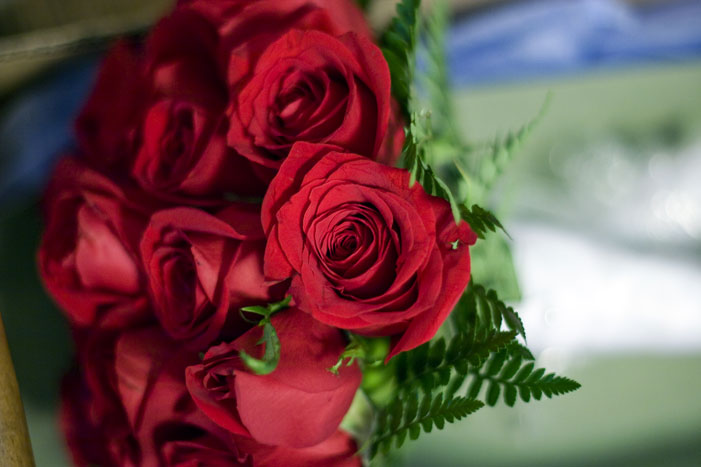
I always wanted a red rose bouquet for my wedding, though, because I’ve always loved the classic elegance and simplicity of red roses. I felt that if I was justified in spending money on flowers one time in my life, my wedding day was it.

Because they weren’t a top priority for me, I was determined to keep my flower costs low. Here’s what I did to minimize the impact on our budget:

Keep your attendants to a minimum.

The more bridesmaids and groomsmen you have, the higher your flower costs will be. Most of the florists I called estimated $40-$80+ per bridesmaid bouquet and up to $15 for boutonnières and corsages. Keep that in mind before you decide to ask 10 people to join your bridal party.

Decide what you want before you talk to a florist.

I had a really hard time finding a florist who would work with me from a long distance without a “consultation” to pick out my arrangements. Why? I’m convinced it’s because they wanted to sell me huge, expensive arrangements, which is easier to do when they’re sitting in front of you with a big book of expensive floral arrangements.

If you don’t know exactly what you want, look through some bridal magazines and research some flowers before you start calling florists.

Make sure the flowers you want will be available in your area on your wedding day.

Exotic flowers or flowers that must be shipped from somewhere else are more expensive for obvious reasons.

Skip the centerpieces and altar flowers.

We chose to skip the decorative flowers. The only flowers we had were red and white roses for the bridal bouquet; an attendant bouquet; boutonnières for the groom, best man, fathers, and grandfather; and corsages for our mothers and grandmothers.

Decorative flowers can add hundreds, even thousands of dollars to your flower costs. If your budget is small, leaving them out is a great method for keeping costs down.

If your budget is super small, you might consider skipping the corsages and boutonnières for the parents and grandparents. I considered doing that when some of the florists estimated $30 each for the corsage. We decided to leave them in when we found a florist who only charged $10 each.

Shop around, and get several estimates before you choose a florist.

I was amazed at how much florist prices vary. I was given estimates that ranged from $200-$700. Yikes! That’s why it’s so important to call many different places and insist on estimates.

I called every florist in town, told them exactly what I wanted, and asked how much it would cost. The florist I chose was about $500 cheaper than the most expensive florist in town. It pays to do your homework.

Do it yourself.

Many brides swear you can save a ton of money by buying fresh flowers and arranging them yourself. You can find instructions all over the Internet for handmade boutonnières and bouquets.

If you decide to go this route, be sure to do some research and compare the cost of fresh flowers to florist prices. Depending on what kind of flowers you want and how elaborate the arrangement is, doing it yourself might not be worth the headache.

My bridal bouquet was made of 3 dozen roses and only cost $60. I don’t think I could have saved much by doing it myself. The florist’s bouquet was a lot prettier than anything I could have done, and having it arranged and delivered saved me a lot of stress.

For brides who aren’t sentimental about fresh flowers, silk bouquets can save you a ton of money. The bonus is they never wilt. I was partial to the look and feel of real flowers myself, but silk flowers might be your best option if you want to hang on to your bouquet for years to come.

Make sure all of your flowers are delivered.

With so many things happening all at once, it’s difficult to keep track of it all. When the flowers arrive, be sure to take a few minutes before you start handing them out to make sure everything was delivered. Flowers are expensive, and if something was left out, you shouldn’t have to pay for it.

We ordered a floral cake topper that should have been delivered to the reception site. It wasn’t. Luckily our quick-thinking cake baker put some extra frosting roses on the top of the cake when she delivered it so it wouldn’t be bare.

The topper wasn’t that important to me anyway, so it wasn’t a huge deal. I didn’t want to pay for flowers that were never delivered, though. So I called them when we got home from the honeymoon and asked for a refund. They gladly credited the $15 back to my account.

Our grand total for flowers: $180.

The red rose bouquet was honestly my favorite part of my bridal attire, so it was worth it for me. The roses look absolutely stunning in our pictures.

I was sad when the flowers wilted, but throwing them away only reminded me of why I don’t want my husband to buy me flowers. I much prefer chocolate, though it doesn’t last any longer. :)

Works for Me: Salon haircare products for cheap

For this week’s Works for Me Wednesday, I’m going to go ahead and disagree with Shannon at Rocks in my Dryer who says salon haircare products are a rip-off.

For people like me with extremely dry, unmanageable naturally curly hair, salon products can be a lifesaver (and a time saver). Many people don’t notice a difference between salon products and cheaper brands, but when I used Suave my hair was a big mess. I could barely get a comb through it, and it was so brittle it crunched when I brushed it. The salon products leave my hair healthier and easier to manage.

So how can I afford salon products on a frugal budget? It’s easier than you think.

I absolutely love Paul Mitchell Super Strong shampoo and conditioner, which runs about $18 a bottle for about 10 ounces in most salons. That’s $1.80 an ounce. Yikes.

I’ve never paid $18 for a little bottle. Many salons sell sets with 1 liter (34 ounces) each of shampoo and conditioner for $26 total. At that price, I’m paying 38 cents an ounce. Much better.

Just by buying in bulk, I’m already saving $1.42 an ounce. Then I stretch my savings even further by limiting my consumption.

My hair is extremely dry (I’m talking Sahara here), so it’s actually much healthier when I only wash it a couple times a week. My sister, on the other hand, has beautiful, easy-to-manage hair. I can’t tell you how jealous I was in high school when she woke up 10 minutes before we left, jumped in the shower, and let her hair air-dry beautifully while I was up 2 hours early fussing with my daily bad hair days. If she goes longer than 24 hours without washing it, though, it starts looking oily and limp. She has to wash her hair every day, but the trade-off is she can use the cheapest shampoo and still have good results.

Most people fall somewhere in between — you might not have camel-hair like mine that can go days without water, but you probably don’t need to wash every single day. Try washing it every other day. If it still looks great the second day (and it most likely will), see if you can make it another day. Don’t wash your hair every single day unless you discover you absolutely need to. Trust me, unless you’re one of those people with extremely oily hair, you’ll discover that cutting back on washing will make a world of difference in the overall health of your hair and reduce your haircare budget dramatically.

Even though I have very thick hair, I only use a tiny dollop of shampoo and conditioner. You’d be surprised how little you need to get a good lather and get your hair clean. Experiment with this, too. Remember, you can always add more if you’re not getting enough lather, but you can’t take it off your head and put it back into the bottle if you use too much.

Using these tricks, I’m able to stretch those 1liter bottles out to about 8 months. My combined cost for shampoo and conditioner is roughly 81 cents a week or $3.25 a month.

Side note: Because my husband washes his hair every day and doesn’t care what kind of shampoo he uses, we use separate shampoos. We buy generics or whatever is free at the drugstores for him.

For those of you with no-fuss hair, getting random brands for free or next to nothing at the drug stores is certainly a better deal. But for those of you like me, there is an alternative to cheap brands that won’t break your frugal budget.

Subscribe

Fall cleaning?: Clutter cleanup goals for September

I’m getting a late start, but I decided this past weekend to set a new goal for myself. We have a ton of clutter that’s built up in every nook and cranny of our apartment. Drawers in the guest bedroom, closets, the bookshelves … basically everywhere that is capable of accumulating stuff.

I tend to get motivated to clear clutter in the fall instead of the traditional spring cleaning for a few reasons:

  • With colder temperatures and bad weather coming up, I know we’ll be spending more time indoors.
  • We might be getting some visitors in October or November, and I want to be ready for them.
  • We’re heading out to Seattle to visit my sister the first weekend in October (more on that later), and I’d like to get everything cleared away before we go. Don’t you just love coming home to a clean house? It makes the end of vacation not so bad.

So here’s the rundown of everything that needs to be done in the next three weeks:

  • Massive wardrobe overhaul – I want to donate everything in my closet that I haven’t worn this summer. My husband and I share a closet, so I like to do this every season to clear up some space. Because we don’t have a lot of room, we put seasonal clothing into storage at the beginning of each new season. Clearing out my closet now will ensure that I’m not wasting space by storing things I don’t wear, and it will make it easier to transition to winter clothes.
  • Empty out the drawers – I have a really bad habit of stuffing things into drawers without organizing them. Extra drawers become a depository for things that I don’t really need or want. The drawers I use on a daily basis are pretty organized, but if I don’t see it, then I have a bad habit of letting it get out of control. When I do need something (like batteries for the flashlight last weekend), I open the drawers to find nothing but a big old mess. So I periodically need to clear everything out, organize what I’m going to keep, and throw away the things I’m not.
  • Organize the closets – Like the drawers, the closets we don’t use regularly are a big mess. We have three extra closets, and they’re all full. Ridiculous. Time to purge and organize.
  • Organize our kitchen cabinets – We’re usually pretty good about keeping these in order because we use them every day. But the space under our sink has gotten pretty cluttered, and the inside of the cabinets could use a good cleaning. There’s also some nonperishable stuff in the pantry that, although it’s “nonperishable,” has been in there too long.
  • Assess our book and DVD collections – We’ll probably always be book collectors. My husband is going to be a literature/creative writing teacher, so it kind of goes with the territory. I don’t mind a large book collection. There’s always something to read! It needs to be monitored in the same way that a wardrobe does, though. We haven’t been buying many books for the past year, but our may tastes have changed. We may still have books/DVDs that we bought a long time ago and don’t like enough to keep. It’s time to go through them, dust the bookshelf, decide what’s staying, and sell what’s going.

These are some pretty big goals for me, especially since I’m notorious for making big plans to be productive over the weekend and getting nothing done. My husband is always willing to team up with me on projects like this, so I won’t be doing it alone. Hopefully we can get it all done!

Does your home need a good fall cleaning? Why don’t you join me! Tell me your goals for getting your home clutter-free and ready for winter and the holiday season!