On your mark, get set …
 Tomorrow afternoon, we set sail for a four-day cruise to the Bahamas. I so need some sunshine and relaxation.
Taking time off from my day job was easy. Unfortunately, taking time off from my own to-do list, worries, and work isn’t so easy.
It’s been months since we took real time off to relax, and no matter how much I plan to relax in Europe, I know better. With all the travel and things to do, I doubt we’ll have much time to just be.
Our trip this weekend is different, though. We don’t have high expectations or a long to-see list. I have no itinerary and no plans. We planned for this cruise to be our chance to recharge and refresh ourselves before the craziness coming up. The past few months have been hectic, and the months ahead will be even more so. We need to take some time to ourselves to reflect on what’s coming up and prepare for what’s ahead.
So I’m requesting time off from myself. I need a few days to collect my thoughts. I need time to read a book without feeling guilty about everything else I should be doing. I need to spend some real time with my husband talking and planning for the near future without work between us.
Tony is guilty, too. With his thesis due at the end of next week and graduation quickly approaching, I feel like his computer has become permanently appended to his lap. It’s rare that I’m able to pull him away from his work for a real conversation.
Because the weekends are when I do most of my writing for this site, posting may be light next week. I hope to catch up early in the week, but there’s no telling what my schedule will be like when we return.
After this trip, it’s time to get serious about packing our lives and moving north. It’s time to prepare ourselves for a new home, new jobs, and what will surely feel like a new life. So much is changing so soon. I hope we’re able to stop the clock, if only for a weekend.
Photo by lynnoel
Endlessly waiting
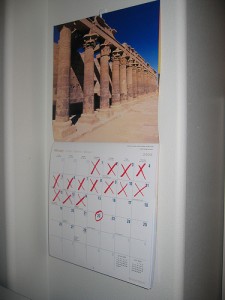 Ever since I was a kid, I’ve had a pretty serious addiction to countdowns. It’s normal when we’re kids, though, right? We’re always waiting for the next birthday, Christmas, summer vacation. It seems we’re always counting down to something.
It’s just that I never grew out of it.
It’s not that I’m unhappy with the here and now. Sometimes I am. But most of the time, I recognize how good I have it now. I enjoy the present. I do. But I’ve always got one eye on the future, looking ahead to what’s next. It’s in my nature to plan and prepare, and how can I do that without anticipating the next big thing? How can I prepare if I don’t keep my eyes ahead?
The problem is, no matter how hard I try to stay grounded in the present, all of this anticipating inevitably steals some of the joy of now. The more exciting the next step is, the harder it is for me to enjoy what’s now without wishing my days away.
I hope I always have a next step to plan for. I hope there’s always a reason to look ahead with excitement. The day that I wake up and realize there’s nothing exciting in my future would be a sad day, indeed. But I need to work on looking ahead to tomorrow without rushing through today.
I need to teach myself to focus more on the present. Most importantly, I need to learn that while it’s okay to plan and prepare, it’s useless to worry about the future. The universe has a tendency to work itself out for the best. My worrying won’t make a bit of difference in the end. All it does is steal my joy in the present.
Each day I look at the calendar and mentally tally up the days until our trip and the days until the next chapter in our lives begins. Each day it gets a little easier as the wait gets shorter. But every once in a while I need to remind myself to slow down. I need to remind myself that someday I’ll look back on this time in our lives, and I’ll wish I hadn’t counted down so anxiously to its end.
Photo by wdecora
Desperately seeking a subletter
 One of the big things on my “to-do before we move” list — the thing I’m dreading most — is figuring out what to do about our apartment. We’re moving at the beginning of May, but our lease isn’t up until the end of July. This means we could end up paying three months’ rent for an empty apartment unless we can find someone who wants to live there until the end of the lease.
According to my landlord, in North Carolina, we have two options for avoiding this. The first is to give the landlord 30 days’ notice that we want to terminate our lease early. They’ll put the apartment back on the market, and if they can find a renter, they’ll let us out of our lease. This is ideal, but it’s also unlikely. Unfortunately, there are two other 2-bedroom apartments that will be vacant as of April 30, which means those two will be rented out first.
The other option is finding a subletter. This is a lot more work on our part. Not only do we need to find someone who is interested in renting the apartment, but we have to stay on the lease for those three months while a stranger lives in the apartment. We remind liable for rent if they default.
From what I can tell, here’s the process we’re facing for finding a subletter.
- Find someone who is interested in renting the apartment from May until July.
- The subletter must fill out the rental application and pass a credit check and background check in order to be approved.
- We sign a new lease with the subletter. If the subletter defaults on the lease, we are responsible for paying the rent.
I hate the idea of doing it this way, but I really want to avoid paying rent for those three months when we’re not living here.
We live extremely close to Tony’s university, so I’m really hoping we’ll find a college student (or two) who needs a place to stay for the summer. I posted a listing on Craigslist, but no one has responded to it. After spring break, we’ll be posting some flyers around campus advertising the opening. Beyond that, I’m not really sure how to go about finding a subletter.
Anyone have any suggestions on how to find a reliable subletter?
Photo by jessandcolin
Choosing the right gym for you
 My friend Kacie is considering a gym membership, so she asked me for some advice on how I chose my gym. When I started thinking about it, I realized how much more goes into choosing a gym than just finding a good deal.
No matter how little you spend per month, it’s a waste of money if you’re not using the membership. Before you sign a contract, spend some time researching, visiting gyms in your area, and asking questions. As you consider your options, keep these things in mind.
How do you like to work out?
When I’m working out, I like to be alone with my thoughts. I read a book while pedaling on a stationary bike or listen to music while running on the treadmill. For some people, nothing sounds more boring, and they’d rather take a fitness class. If you’re looking to tone up and you’ve never lifted weights before, you’ll want beginner weight lifting equipment. If you’re not sure, you’ll want a gym with a mix of cardio and weight lifting equipment as well as a variety of class offerings so you can try it all.
How much instruction do you need?
If you’ve never worked out before, you might want to choose a gym that offers guidance through personal training or fitness classes. My gym offers free orientation sessions where they teach you how to use all of the equipment and help you develop a work out plan that fits your needs. If you’re a beginner, that kind of instruction and guidance may be what you need to get started on the right track and stick to it.
What kind of gym culture do you want?
Make sure you take a tour of the gym you’re considering during the time of day you’re most likely to work out. Pay attention to the people working out and the way you feel around them. You should be comfortable and feel like you fit in the gym. You may feel a little timid if you’re a beginner, but you shouldn’t feel inadequate or uncomfortable.
When I was looking for a gym, I visited two different places. One of them was filled with big muscle men and women. The women looked like they’d put on makeup and did their hair before heading to the gym. I would not have fit in there. My gym caters to people who are trying to lose weight or get in shape, so it’s a much better fit for me.
When do you want to work out?
Be sure that your gym will be open when it’s most convenient for you to work out. If you’re a night owl, a gym that closes early isn’t for you. If you like to get up at the crack of dawn, make sure your gym has early hours. And be sure to ask about weekend hours.
Wait for a deal.
Once you choose your gym, don’t just rush in and sign up for full price. It seems like every other month my gym is covered in signs offering great deals for new members. I paid full price for my membership, and a week later, they started a promotion that waived the $30 application fee. I could have saved $30 just by waiting a few days.
Before you sign up, ask if there are any annual membership drives coming up. Continue working out at home for a few weeks while you watch for deals. You could end up locking in a cheaper monthly price just by taking your time.
Understand your contract.
Just because they’re pushing you to sign a 12-month contract doesn’t mean it’s your only option. Think realistically about your track record. Are you someone who has struggled to stick with exercise in the past? Then a 12-month contract might not be for you. Ask about other options to protect yourself from throwing money every month at a gym you’re not using.
Photo by obo-bobolina
Song of the Day

Slow down, you’re moving too fast
 Almost two months ago, I started training to run my first 5K. I started out strong and motivated, but instead of getting easier, it’s been getting harder.
For the past few weeks, motivation has been a problem for me. As the runs became longer and more intense, my drive to get myself into the gym every night started waning. I wasn’t progressing in the Couch to 5K program as quickly as I wanted, and I was dreading my workouts instead of looking forward to them.
Last week, I came close to giving up. So I decided I needed a new game plan.
Couch to 5K is based on interval training with a blend of walking and running. It begins with equal intervals of walking and running, but as your training builds, the walking intervals decrease and running times increase. I was doing well in the sprints, but as the running intervals increased, I started to struggle.
This week I wanted to increase my endurance, and so I decreased my speed a little. I’d been setting my running pace at the same miles per hour from the beginning, but I realized that the speed that worked well for shorts sprints during interval training was too fast to sustain on longer jogs.
Sure enough, my endurance was much better at the slower speed. I made it through my first long run without walking on Monday, and last night, I ran a mile straight without walking for the first time. (YES! PROGRESS!)
So I’ve changed my game plan. Couch to 5K was a fantastic training plan for me in the beginning, but it’s not working for me anymore, so I’ve developed my own training plan. I’m focusing on distance and endurance instead of speed.
I have about a month to build from a 1-mile run to 3 miles for my 5K at the end of March. With each workout, I’m going to increase my distance by a quarter mile, but my pace will remain at a relatively steady jog. As the jogs get easier, I’ll gradually increase my pace. My goal is to run the entire 5K in under 40 minutes. That may seem slow to seasoned runners, but it would be a victory for me.
It’s a relief to realize that I’m not failing just because one training plan didn’t work for me. It doesn’t matter how I get there as long as I accomplish my goal.
My problem was that I was trying to do too much too fast. I wanted to see results overnight, and when it didn’t happen as quickly as I wanted, I came close to giving up. But I reminded myself that running is a discipline that takes time and dedication, just like saving money or getting out of debt. It’s about making progress little by little, step by step. It’s important to keep the ultimate goal in mind, but you also have to keep all of those little steps in mind to motivate yourself. You have to celebrate each little step as it brings closer to your goal.
My motivation is renewed, and I’m ready to try a new approach.
Photo by chezdom
5 ways budgeting and weight management are alike
This post was originally published on September 22, 2008.
 One of my first posts was about how I lost weight using basic budgeting skills. Now that I’m working to get healthier, I wanted to revisit the topic. Only this time I’m talking about why constant monitoring and reassessment are crucial to staying physically and financially fit.
Here are some tips I’ve found helpful when managing my weight and my budget:
1. Be realistic.
Sometimes it’s necessary to go on a strict budget to pay down massive debt. You may have to cut all discretionary spending for a little while to overcome a major financial hurdle. However, if you try to maintain that level of restriction for too long, it’s harder to stay on track and meet your own high expectations.
Your best bet is to find a comfortable balance between necessary bills, discretionary spending, and saving. Maintaining a reasonable budget requires constant monitoring, but it shouldn’t be incredibly difficult or make you feel deprived.
2. Frequently monitor your progress to catch yourself before you veer too far off track.
Once you find a comfortable budget, it’s crucial that you measure your progress regularly. Without careful planning and monitoring, you could easily throw your entire monthly budget off track with one weekend of bad decisions. Imagine how bad it could get if you just stopped monitoring your spending for months at a time.
Just as you check your budget frequently to make sure you’re not overspending, you must weigh yourself regularly. A slight increase in weight could alert you to a problem in your diet and activity before you veer off track to an unmanageable degree.
3. The longer you avoid the problem, the harder it is to resolve.
It’s much easier to pay off your credit card balance every month than it is to pay down several thousand dollars of debt that’s accrued over months or years. It’s also a lot harder to lose weight when the pounds have packed on over time. Overcoming a 1-pound weight gain usually just involves watching what you eat closely for a few days. It’s a lot harder to get back on track if you wait until you’re 40 pounds overweight.
4. Constantly adjust according to your changing needs.
When it comes to budgeting, everybody knows that you can’t continue spending the same after a major pay cut. When your income decreases, your spending must decrease, too. Likewise, when you welcome a new baby, your discretionary spending is probably going to take a hit to accommodate for diapers and formula.
You must find the same balance between activity and calorie intake for weight management. I first started struggling to maintain my weight after my job changed two years ago. In retail, I was on my feet 8 hours a day running around the store, moving heavy objects, and constantly moving. I didn’t watch my diet as closely as I should have, but the constant activity made it easy to keep extra weight off. Now that I’m sitting at a desk all day instead of moving, I need to seek out more activity outside of my job and become mindful of what I eat to avoid weight gain.
5. Sticking to it and making the right choices are the hardest parts.
Everyone knows that the easiest way to stay ahead of the game financially is to spend less than you make. We also know that the best way to maintain a healthy weight is to burn more calories than you consume. It all sounds so easy when you break it down into those simple equations, doesn’t it? The truth it, it’s not that easy.
The part that’s left out of that equation is the constant struggle every day to make the right choices and stick to your commitment. After all, if it was as easy as it sounds, nobody would struggle with their weight or their finances.
The best thing that weight control and budget management have in common? They’re both totally worth the struggle.
Photo by nataliejohnson
Simple ways to save time and reduce stress
 As I try to stay sane for the next couple months despite my mile-long to-do list, I’m looking for quick and easy ways to reduce stress.
Here are a few things I’ve tried in the past few weeks that have helped immensely.
Plan ahead.
At the beginning of each day (or each week), take a few minutes to make a rough outline of what needs to be completed and when. It may feel like you don’t have time to stop and regroup before you tackle the day, but making a game plan will help you prioritize tasks, manage your time more efficiently, and keep you on task.
Delegate and ask for help.
It may seem like you’re on your own, but chances are your support network is more willing to help than you think. Enlist your spouse, children, or co-workers to handle appropriate tasks on your to-do list. Once you’ve mapped out your game plan for the day or week, figure out which tasks would make the most sense to outsource.
Deal with it now.
I have a tendency to let a million little things pile up in my life. I leave a ton of emails in my inbox. I let the junk mail pile up on the kitchen table. I wait until the last possible minute to do everything.
If you want to cut your stress instantly, try taking care of those little bothersome things right away. Archive or delete every email as soon as you’ve read it. Throw junk mail into the recycling bin as soon as you’ve read it. Wash your dishes as soon as you finish eating. By taking a little time to take care of this stuff as it happens, you’ll reduce the total number of items looming over you on your to-do list.
Make your health a priority.
You may be tempted to give up relaxation, exercise, or sleep in favor of work or chores. When you sacrifice your health, you’re not at the top of your game, which will lead to less productivity. Take the time to take care of yourself, and you’ll get more done in less time, leaving you with more hours in the day when your work is done.