Category Archives: Simplicity

Curing the summertime blues

end of summerMost people are likely to feel a little blue during the dark winter months, but I always start to feel down at the end of August. In North Carolina, it’s been unbearably hot and muggy since the end of May, and we’re still facing another 3 months of heat and humidity. I’m homesick for fall and cranky from the heat. I start to feel like I need a pick-me-up.

Here are some surefire tactics for combating the summertime blues:

Take a short trip.

We planned our frugal vacation back home strategically during one of the hottest weeks of the year in North Carolina. Right now, it’s 104 degrees back home. It’s still hot and muggy in Indiana, but we’re dealing with 85-90 degrees instead of an unbearable 100+. We’re also spending time with family, taking a much needed break from work and home life, and relaxing. Since we still have a couple months left of muggy summer weather, this is a nice break in between to recoup and recharge before Tony heads back to school.

Take advantage of the things you love about summer.

For many of you, this may not be a problem. When I talk about being tired of summer, most people think I’m a little crazy. But if you’re like me and you’re craving fall, remind yourself of all the things you do love about summer. For us it’s fresh produce, driving with the window down, and late sunsets.

I remind myself that pretty soon I won’t be able to enjoy fresh produce for cheap or drive to work with the wind in my hair. Pretty soon the sun will set before I even leave work. So I’m trying to enjoy the end summer instead of thinking about how miserable the heat makes me or how much I dread those summer electric bills.

Start a new project.

With the summer winding down, it’s easy to feel sluggish and unmotivated in the heat. The easiest way to pick yourself up again is to immerse yourself in a new project. Find something that excites you, and get started on it now. Last year around this time, I started this blog. Now is the perfect time to clean your house top to bottom and make some money at a late-summer garage sale. This year I’ll probably commit myself to finally finishing one of my quilting projects or purge the junk in my apartment.

What about you? Are you feeling the summertime blues? How do you fight them?

Photo by jimntonik

Mistakes were made: A belated weekend recap

I had a post scheduled for yesterday celebrating my blogiversary, so I was able to take it easy on Sunday. Boy, did we need to take it easy.

From the beginning, our trip to Washington D.C. to see Paul McCartney in concert was thrown off. We planned to go to the Newseum before the concert when we arrived Saturday, but we were caught up in traffic, and by the time we got to our hotel there wasn’t enough time to get to the museum before it closed. We decided to go to dinner instead.

We had a lovely frugal dinner and stayed within budget. Paul McCartney was fantastic, and absolutely worth the trip. It truly was a once-in-a-lifetime experience that Tony and I will remember for the rest of our lives. This wasn’t an instance where we blew some money on something we’d soon forget.

The concert was even better than we expected. A setlist that included a ton of our favorite Beatles songs, fireworks, and a killer finale were some of the highlights. We had a fantastic time.

It was all downhill after we left, though. In hindsight, I know a lot of our problems resulted from poor planning. This was a spur-of-the-moment trip, for the most part, and we didn’t put as much planning into it as we do other trips.

We ended up lost in the D.C. suburbs of Maryland for two hours while we searched for a Metro station. I wore the wrong shoes and ended up with feet covered in blisters on our 10-mile hike to find a train station. It goes without saying that being lost in a strange city at 1:30 in the morning isn’t a safe situation.

Sunday pick ups at our kennel are by appointment only, and we set ours at 11 a.m. to avoid being charged for an extra day.

Even though we didn’t get back to the hotel until 2 a.m., we had to get up and drive home at 4:30 a.m. to make it back in time. We considered leaving as soon as we got back to the hotel, but we were just too exhausted and neither of us wanted to completely waste the hotel after paying $100. So we slept for 2 and a half hours before getting up and heading home.

So. What have I learned here?

1.) Never — I repeat, NEVER — wear anything but walking shoes if you think you’ll be walking even a little bit. Trust me on this one. My feet are proof that it’s a bad idea to risk it.

2.) In a stressful situation, the last thing you want to do is start yelling at your spouse. After walking for two hours, we started bickering and snapping at each other. We were both stressed, exhausted, and frustrated. Yelling at each other only made it worse.

3.) Don’t freak out! We followed a group of people from the concert thinking they were looking for the train. When it turned out they were just walking to their car that they’d parked a couple miles away, I completely lost it in the parking lot. It was the END OF THE WORLD. That didn’t help the situation either. It only delayed us and heightened the stress of an already chaotic situation.

4.) ALWAYS charge your cell phone completely if you’re going out of town.

Now that we’re safe at home and my injured feet are bundled in soft slippers, it’s all pretty funny in hindsight. We made a lot of mistakes on Saturday, but we also created a lot of memories. Our relationship is strong enough to endure some misplaced snapping without hard feelings, and we’re able to look back and laugh relatively quickly.

All in all, between the tickets, gas, dinner, and the hotel, we spent a little under $250. The night was half fantastic, half fiasco, but all of it was an experience I wouldn’t take back. I don’t think I’d want to live through the Metro search again, but I don’t have any regrets.

Stop making excuses & start making progress

weight lossI used to be the queen of excuses and procrastination. Whether I wanted to lose 10 pounds, start saving, or accomplish a lifelong goal, today was never the right day for it. I always made lofty plans for the future, but I didn’t realize that when it comes to accomplishing your goals, tomorrow is no good. The only way to make progress is to start today.

Constantly making excuses for why tomorrow is better is a good way to prevent yourself from ever making progress at all. The day I realized that my temporary delays were holding me back, and setting a goal for tomorrow results in a never-ending delay, I discovered the key to achieving all of my goals.

Here’s how to get motivated if you’re battling excuses:

Tell yourself enough is enough.

Have you been talking about losing that last 10 pounds (or 50) for the past two years, but always have good reason to wait? “My diet starts after this weekend,” or “As of January 1, I am on a diet,” were my mantras for years. One day I finally said enough is enough. My diet started that minute, and 6 months later I was 40 pounds thinner. Enough is enough. It’s time to get started, because there will always be a reason to wait.

Visualize your goal.

Now that you’ve gotten started, you’re at the hardest part: you know what you want, but you haven’t started to see the motivating results. Now is the time when you need to remind yourself of how sweet it will be when you’ve accomplished your goal. It helps me to remind myself with a little symbol for what I want. Whether it’s your wedding photo from when you were at your ideal weight or a picture of the dream house you’re saving to buy, give yourself a reason to push through the tough part before you start seeing your progress.

Track your progress.

Once you do start to see progress, it’s essential that you do whatever it takes to maintain your motivation. When I was losing weight, I weighed myself daily and took pictures in my bathing suit so I could compare and see the changes. If you’re saving money or paying off debt, tally your total saved or paid every week and figure out a percentage for your progress. Seeing that percentage increase with every dollar will keep you going.

Good luck achieving your goals, and remember, the only way you’re going to get there is if you get started right now!

Photo credit: nataliej

Living well isn’t just about money

I’ve been doing a lot of thinking about the direction of this blog. The truth is, the more settled we become in frugality, the harder it’s become for me to find inspiration for finance-related posts. As Tony and I continue to live a healthy, simple lifestyle, though, I’ve been hit with a ton of inspiration and ideas about simplicity and healthy living.

This is a frugal blog, and I want it to remain a frugal blog. But I’ve been doing some thinking about what frugality really means to me and why I started this blog and this lifestyle to begin with.

When I started this blog, I wanted to document our financial journey and learn new ways to save money. But more than that, I wanted to live healthfully, happily, and simply. That’s why I named the blog “Living Well on Less.” Above all else, I want to live well (don’t we all?). Spending wisely is just another part of living well. Budgeting and saving free us from the stress of paycheck-to-paycheck living and allow us to focus on living a simple, healthy lifestyle.

As I approach the 1-year anniversary of this blog, I’d like to shift my focus just a little bit. I’ll be writing more about lifestyle, simple living, healthy living, and, as my blog title says, living well.

This doesn’t mean I’m abandoning finance posts. After all, mindful spending is a huge part of the simple, frugal lifestyle. I’ll still write about saving money and spending wisely. But I’ll also be writing more about health and wellness, happiness, and simplicity. I’ve always written on these topics, but in the past I felt compelled to tie them in somehow with finance. From now on, all of my posts won’t be related to finance. Some of them will just fall under the umbrella of living well.

I hope you’ll find this updated theme helpful and interesting. I’m so excited! I have a ton of ideas, and I can’t wait to share them with you.

As always, feel free to contact me or comment if you have suggestions for topics you’d like to read about on “Living Well on Less.” Thanks for reading!

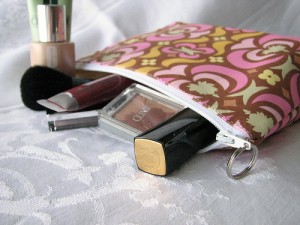
Beauty doesn’t have to be expensive

frugal beauty

One of the most frustrating things about the frugal world is while most people acknowledge that everyone is different when it comes to budgeting and spending, the approach to beauty is relatively one size fits all. The consensus seems to be that you don’t need to spend money on beauty products.

But personal appearance is an important part of living your best life. In order to be confident, it’s essential that you feel comfortable in your skin, whatever that means to you. Everyone is different, and you shouldn’t feel guilty for wanting to invest in your personal appearance to ensure your confidence.

That doesn’t mean beauty budgets don’t need limits, though. As I’ve said many times, the trick to living a full frugal life is balance. Here are some tips to ensure you look and feel your best without blowing your budget:

Prioritize.

What is most important to you when it comes to appearance? Do you have sensitive skin that requires specialty makeup or lotion? Are you self conscious about your body and need certain clothes to feel comfortable? Figure out what it is that makes you feel your best, and focus your budget there.

My naturally curly hair is dry, frizzy, and requires a lot of effort to look nice. I spend a little more on shampoo and hair products, but I wash and style it less frequently to cut back on the products I’m using. Look for compromises to reduce the impact of your beauty  needs on your budget.

Try alternatives.

Don’t assume that the most expensive product is your only option. I spent years trying different hair care products to find a balance between quality and price. I’ve settled on some moderately priced hair care products bought in bulk to give me the results I want while spending the least amount possible. Don’t be afraid to experiment with other brands, generics, and even natural alternatives like baking soda and vinegar. If you can get the desired effect without spending as much, it’s win-win.

Go for quality, not quantity.

Find makeup products that work for you, and stick with them. If you have a drawer full of cosmetics, really consider how often you’re using those products. Wouldn’t your money be better spent on a few high quality products that work well for you? Really consider how much you need to look your best. Try to limit yourself to cosmetics that you’ll use every day.

If stylish clothing is important to you, it’s okay to spend a little more on the latest styles, but if you’re buying expensive fashions you’ll have to get by with fewer clothing items. Try to stick with classic styles that are likely to be fashionable for longer than passing trends. You’ll look stylish without having to buy a new wardrobe every season.

Focus on you.

So much of fashion and beauty is based on other people deciding what’s trendy, fashionable, and acceptable for everyone. The problem is that the beauty and fashion industry is focused on convincing you that you have to spend a lot to be beautiful. Do your best to focus on what makes you feel comfortable. The point isn’t to impress the world with a large collection of clothing and shoes; the point is to make sure you feel comfortable and look your best.

Ignoring the world’s perception of beauty is a difficult habit to break, but it’s an important step in looking and feeling confident without putting yourself into debt.

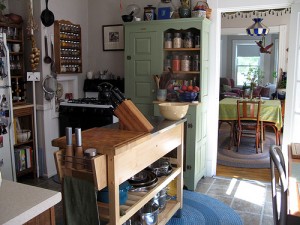
Guest post: 12 essential tools for your frugal kitchen – Part II

kitchen
Photo by quintanaroo

(Here’s the second part of my husband Tony’s guide for 12 essential (and multi-tasking) kitchen devices that will help cut down on the clutter coming in and the dollars going out.)

7.) If you are only willing to buy one knife, make it a good one.
But good doesn’t necessarily mean expensive. Cheap knives can be unsafe; the simple truth is that the money you save on an $8 Chef’s knife might end up going to a hospital bill later. If you only buy one knife, make sure it’s in the 8- to 10-inch range, full tang (that is, the metal runs through the handle), and non-serrated (because serrated knives can’t be honed and sharpened). The cheapest and best quality knife I’ve ever found runs for less than $30 on Amazon. If you have it in the budget to get a few more, get a paring knife for small jobs and a relatively inexpensive serrated slicer for breads and tomatoes.

6.) Heavy wooden chopping block. If you’re going to buy a good knife, you might as well get something proper for it to cut on. You’ll be surprise how often you genuinely use it. A heavy wood cutting board will help keep your knife in good condition, and is ideal for cutting vegetables, fruit, and just about any non-meat related item. Use a cheap, food-grade, dishwasher-safe plastic cutting board for chopping, cubing, or cutting raw meat.

5.) Wooden utensils. They’re cheap, kind to your non-stick pans, dishwasher safe, and won’t melt.

4.) A pizza slicer. Not just for homemade pizzas: use to portion brownies, quesadillas, etc.

3.) Glass storage containers. Pyrex, for example, won’t stain or hold smells; it’s safe for the freezer, the oven, or the microwave; it’s durable and difficult to break; and it’s dishwasher safe. Although slightly more expensive than plastic, when you buy your second or third round of plastic Tupperware after marinara or chili stains the interior, think of how you wouldn’t be buying another set of glass.

2.) Crock-Pot. The appeal of the Crock-Pot began as a device of simplicity and convenience, but most recipes call for few or common ingredients and it has become a worthy tool of the frugal kitchen. In reality, it performs many of the same functions as the cast-iron dutch oven (except direct contact heat), but it also doesn’t require your presence, nor does it require the power and energy generated by an oven, either on the burners or from inside.

1.) Cast-iron skillet. One of the cheapest and most reliable kitchen materials is cast-iron. It involves some annual seasoning, but it holds heat like a volcano (perfect for making a steak if you don’t have a grill). Cast iron is about as indestructible as cookware gets, so it has the potential to last forever. A 10- or 12-inch skillet is a must-have for any kitchen; typically less than $20, it can be used for searing, baking, frying, braising, or practically any other task. With time it develops its own natural non-stick coating, and you can’t beat cornbread made in cast iron.

Tony is my husband, an excellent cook, and a grad student. If you want to read more from him and you like movies, check out his movie review blog.

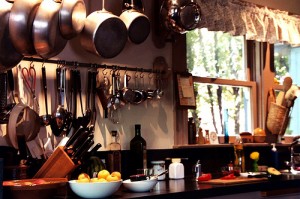
Guest post: 12 essential tools for your frugal kitchen – Part I

kitchen tools
Photo by photoartist3

(This is a guest post from my husband, Tony, an amateur chef who cooks professional-quality dishes. As the primary beneficiary of his culinary talents, I can absolutely attest to his abilities in the kitchen. Here are his recommendations for the only 12 tools you need to make pretty much anything without cramming your cupboards or breaking the bank.)

Stocking a frugal kitchen is a balancing act. Weighing the pros and cons of a particular tool and trying to figure out how much money you should put down for it is as delicate an art as cooking or baking. Depending on the situation, money either is or is not synonymous with quality, which is why the only rule you should ever have when buying a kitchen tool is this: is it a multi-tasker?

I don’t want to suggest a kitchen can survive with just 12 pieces. But these strategically purchased pieces can help cut down on the clutter coming in and the dollars going out.

12.) A 10- or 12-inch nonstick pan. I would never pay more for a non-stick pan than I would want to pay again in the next few years. Unfortunately, it doesn’t matter if you buy the cheapest non-stick pan or the most expensive non-stick pan: both are susceptible to that single nick that will cause them to lose their functionality. Although keeping a non-stick pan in pristine condition for multiple years is certainly not impossible, most of us don’t store it in a museum display case and will have an accident that will begin to ruin the pan. Look for a pan in the low-middle cost range; something that has a little heft to it (to hold heat and allow for even cooking, which the cheapest ones don’t) but won’t make your bank account cry if you chip it.

11.) A thick rubber-handled manual can opener. Cheaper than an electric variety, easier to clean, and if the handle is rubber, it can moonlight as a jar opener.

10.) A large pot, 8 to 12 quarts. Perfect for soups, stews, and stocks. (Every frugal kitchen should be making its own stocks!)

9.) In most cases, buy plastic instead of metal.
It’s cheaper and it lasts longer. Metal, particularly stainless steel, looks beautiful — but cheap metal measuring cups can bend at the handle, and cheap metal measuring spoons can rust. My mother still uses the same simple plastic measuring devices she received at her wedding. And if you’re looking into plastic utensils (particularly flexible-head spoon spatulas), it’s worth the extra dollar or two to buy something that is safe to high temperatures; melted plastic is never a tasty ingredient.

8.) Tongs. They’re like a third hand. If you can only buy one, get the ones with heat-resistant plastic on the ends so they won’t ruin your non-stick cookware.

Tony is my husband, an excellent cook, a grad student, and a movie reviewer. Check back tomorrow for the second installment of his guide to essential tools for the frugal kitchen!

The importance of dreaming big

frugal goals
Photo by martie

I’m the first to tell you that frugality is a real struggle sometimes. No matter how committed I am to this lifestyle, no matter how appreciative I am of the security and peace of mind it brings us, I still have weak moments when I look at what other people have and want.

I want to own a pretty little house with a huge fenced-in backyard and a cozy fireplace.

I want to travel every other month and see the world.

I sometimes even want to buy big ticket items that we don’t need just for the luxury, like a big screen TV or new furniture or even a second car.

But the hardest part isn’t the big stuff. I can always easily remind myself why we need to wait for those things. I remember what debt feels like, and I don’t want to owe a furniture store or a credit card company ever again.

The hardest part is not spending little amounts every day. Sometimes I find myself wishing I could spend $5 on a frou frou coffee drink from Starbucks or $15 on a book or $30 on a restaurant meal.

Don’t get me wrong, we give in to those urges every now and then. But we can’t give in every time I want to or we’d never make any progress. We’d nickel and dime ourselves right out of our savings.

When I find myself struggling to say no to the little things, I remind myself of our big dreams. Our trip to Europe, the house we want, the family we plan to start in the next couple years. When I think about those big dreams, and how every penny is bringing us closer to achieving them, it’s much easier to resist the temptation to spend a little here and a little there.

When I think about our big dreams, suddenly buying a frou frou coffee drink isn’t nearly as important. I can live without that little stuff if it means we’ll have the big stuff sooner.

How do you keep yourself going when frugality gets tough?

New to frugality? What to do first

Frugality is overwhelming in the beginning. I remember reading blogs from frugal veterans who made it sound easy, but I was terrified. Cutting groceries down to $35 a week, zero-based budgeting, coupon clipping, drug storing? It may have been easy for them, but I didn’t know where to begin.

Take a deep breath. Remind yourself that frugality is a major life change. It’s not going to happen overnight. The best way to get started is to jump in, and don’t try to change your life too drastically in the beginning. Frugality is a gradual change, one that you’ll hopefully be able to maintain long term. It’s okay to start with baby steps.

Here’s how to get started:

Figure out where your money is going.

Before you can cut expenses or create a budget, you need to know what you’re spending and where. Link your bank accounts to Mint.com, and spend normally for a couple weeks. This step was incredibly eye-opening for us in the beginning, and we immediately saw some areas where we could easily cut back.

Create a budget.

Next it’s time to face the dreaded b-word. Don’t be scared, though. Budgeting is actually empowering, especially in the beginning. Don’t try to deprive yourself or make drastic changes at first. Just create a zero-based budget to ensure that you’re not spending more than your income. I use Mint.com to set limits on our spending, and then I track it in real time. Every dollar has a purpose, and anything left over goes to savings or debt. You can always reduce your expenses later. The most important thing in the beginning is getting used to tracking and following your budget.

Open a savings account.

Even if you’re deep in debt and struggling to make ends meet, find a way to start saving something. You can always increase the amount later. What’s important now is establishing the habit. Even if all you can spare is $25 or $50 a month, open an ING savings account separate from your checking and start putting a little money away.

Learn to entertain yourself without spending money.

The first step to having fun without spending money is learning to love your library. If you don’t have a library card yet, go get one right now and start borrowing books and movies for free. Check out a cookbook first. If you’re like my husband and me, eating out is probably one of your favorite date night activities. Learn to have fun cooking for yourselves, and you’ll drastically cut your food budget.

Create menu plans & grocery lists.

When you first start cooking at home, it’s tempting to go overboard at the grocery store. You don’t have to cut your grocery spending to $35 a week to make the most of your shopping trips, though. Find a menu planning strategy that works for you, plan your meals with the grocery ads in front of you, and start buying meats and staples in bulk. You’ll cut your grocery expenses without affecting the quality of food you eat.

It’s okay if you makes some frugal mistakes in the beginning. Learn at your own pace. As you master these basic frugal habits, you’ll gradually find yourself learning new ways to save even more money. It’s an ongoing process for everyone, even the frugal masters.

As long as you’re committed to saving money and reducing debt little by little, your life will continue to improve. Remember, frugality is about improving your quality of life, not just cutting your expenses.